
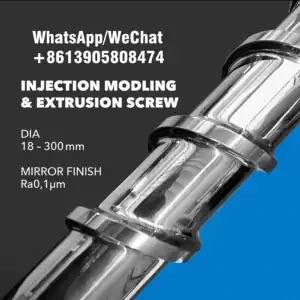
In the plastics extrusion industry, twin-screw extruders are essential for processing a wide range of materials. Two main designs dominate the market: conical (tapered) twin-screws and parallel twin-screws. Understanding their differences is key to selecting the right system for your specific application.
🔍 Structural Differences
| Feature | Conical Twin-Screw | Parallel Twin-Screw |
|---|---|---|
| Geometry | Tapered diameter from feed to die end | Constant diameter throughout length |
| Torque Transfer | Higher torque at lower speeds | Moderate torque at higher speeds |
| Length-to-Diameter (L/D) Ratio | Generally shorter (around 20–40) | Generally longer (up to 40–50) |
| Space Requirements | More compact design | Requires more installation space |
🏭 Application Comparison
| Aspect | Conical Twin-Screw | Parallel Twin-Screw |
|---|---|---|
| Material Suitability | PVC, CPVC, WPC, highly filled compounds | PE, PP, PA, compounding with fillers |
| Shear and Mixing | Moderate shear, good plastification | Higher shear, better for mixing and reactive extrusion |
| Energy Efficiency | Lower screw speed → lower energy consumption | Higher screw speed → higher power demand |
| Maintenance | Easier alignment and shorter screws reduce wear risk | Longer screws, higher wear potential but better mixing |
| Output | Stable output with moderate throughput | Higher throughput, better for large scale compounding |
💡 Key Advantages of Conical Twin-Screw
- Higher torque enables processing of high-filler PVC and WPC with stable melt quality
- Lower RPM reduces energy consumption and mechanical wear
- Compact size saves space and simplifies maintenance
- Ideal for extrusion of pipes, profiles, and sheets with consistent product quality
💡 Key Advantages of Parallel Twin-Screw
- Superior mixing and dispersive capabilities for polyolefin compounding and specialty polymers
- Suitable for reactive extrusion and multi-material blending
- Longer screws allow more intensive shear and better melting of difficult polymers
- Higher throughput capacity for large-scale production
⚠️ Common Misconceptions
- “Parallel screws are always better for mixing.”
While true in many compounding cases, conical screws can be customized with mixing elements to improve homogeneity in PVC and WPC. - “Conical screws are outdated.”
Not at all—modern manufacturing techniques and coatings make conical twin-screws highly efficient and durable, especially for PVC extrusion.
🛠️ Choosing the Right Twin-Screw for Your Line
- If your main product is PVC pipes, profiles, or filled composites, and you prioritize energy efficiency and product stability, conical twin-screws are often the best choice.
- If you process polyolefins, specialty polymers, or need reactive compounding, parallel twin-screws provide the necessary shear and mixing performance.
📞 Need Expert Guidance?
Unsure which twin-screw extruder suits your application? Contact Zhoushan Juyuan Machinery Co., Ltd. for professional consultation and custom screw solutions tailored to your extrusion needs.
📧 Email: cxj.job@gmail.com
🌐 Website: https://juyuan-machinery.com/
📱 WhatsApp: +85244499051