
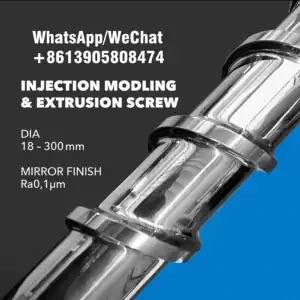

1. Types of Wear in Screw & Barrel
- Abrasive wear
- Caused by glass fiber, mineral fillers, or pigments.
- Results in erosion of screw flights and barrel wall.
- Adhesive wear (metal-to-metal contact)
- Happens if lubrication is poor or clearance is too small.
- Leads to galling and scratches on the screw/barrel surface.
- Corrosive wear
- From flame-retardant plastics, PVC, fluoropolymers, or halogen additives.
- Chemical attack on steel leads to pitting and rough surfaces.
- Erosive wear
- High shear speeds + hard fillers = “sandblasting” effect on metal surface.
📏 2. Signs of Wear
- Increased screw-to-barrel clearance
- Drop in shot weight consistency
- Poor melt homogeneity (black specs, unmelted pellets)
- Longer cycle times, higher back pressure
- Frequent need to adjust processing parameters
📊 3. Acceptable Wear & Tolerances
- New screw-to-barrel clearance: 0.001–0.002 × screw diameter (D)
- Maximum clearance before replacement: 0.005 × D
- Flight land wear: ≥0.1–0.2 mm affects performance noticeably
- Barrel bore ovality: should be ≤0.1 mm
Example (Ø60 mm screw):
- New clearance ≈ 0.06–0.12 mm
- Max wear limit ≈ 0.30 mm
🛠 4. Prevention & Solutions
- Material choice:
- Use bimetallic barrels and wear-resistant screw coatings for glass-filled resins.
- Operating practices:
- Avoid running the barrel empty at high temps.
- Keep back pressure moderate.
- Purge properly before shutdown.
- Maintenance:
- Regularly check screw/barrel with gauges.
- Schedule inspections every 6–12 months (shorter for abrasive resins).
- Repair/Replacement:
- Nitriding, hard surfacing, or plasma spray coatings can restore parts.
- If wear exceeds tolerance, replace to avoid production losses.
✅ In summary:
Injection molding screw and barrel wear mainly comes from abrasive, corrosive, or adhesive factors. Once the clearance grows beyond 0.005 × screw diameter, you’ll see serious performance issues — at that point, refurbishment or replacement is recommended. Using wear-resistant materials and proper maintenance extends service life significantly.