
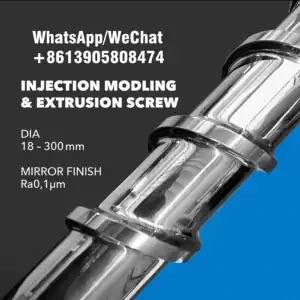
Plastic pelletizing machines are critical for converting polymer melts into uniform pellets used across industries. The heart of these machines lies in the extrusion screw and barrel, whose design directly affects pellet quality, throughput, and energy efficiency.
This guide explains the key parameters and selection criteria for screws and barrels in pelletizing machines, helping you make informed choices for optimal operation.
1. Key Screw Parameters
a. Screw Diameter and L/D Ratio
- Typical diameters range from 40mm to 150mm for pelletizers.
- L/D (Length-to-Diameter) ratios usually between 20:1 to 40:1.
- Longer L/D improves melting and mixing but increases torque requirements.
b. Compression Ratio
- Ratio of feed channel depth to metering channel depth.
- For pelletizing, a medium to high compression ratio (1.8–2.8) ensures thorough melting and pressure buildup for uniform pellets.
c. Screw Geometry
- Feed Zone: Deep flights to ensure smooth feeding.
- Compression Zone: Gradually decreasing channel depth for melting.
- Metering Zone: Shallow flights for homogenized melt and pressure control.
d. Mixing Elements
- Maddock, spiral, or barrier mixing sections improve melt uniformity and degassing efficiency, crucial for pellet quality.
2. Barrel Key Parameters
a. Material and Hardness
- High wear resistance needed due to abrasive fillers (CaCO₃, glass fibers).
- Common materials: nitrided steel, bimetallic barrels, or tungsten carbide coatings.
b. Bore Diameter and Surface Finish
- Precise bore machining ensures tight clearance, preventing melt leakage and improving efficiency.
- Surface finish (Ra ≤ 0.4 µm) reduces polymer sticking and wear.
c. Venting and Degassing Ports
- Pelletizers often require venting to remove volatiles and moisture.
- Proper vent design reduces bubbles and improves pellet surface quality.
d. Heating and Cooling Zones
- Multiple heating zones allow precise temperature control.
- Integrated cooling improves barrel stability and screw longevity.
3. Selection Considerations
- Material Type: High abrasiveness demands bimetallic or carbide coatings.
- Throughput: Larger diameter and longer screws for higher output.
- Polymer Sensitivity: Heat-sensitive polymers require gentle screw design with venting.
- Fillers and Additives: Mixing elements tailored to avoid degradation and improve dispersion.
- Machine Brand Compatibility: Ensure screw and barrel match OEM specifications.
4. Common Challenges and Solutions
| Challenge | Solution |
|---|---|
| Frequent wear | Use bimetallic barrels or tungsten carbide coatings |
| Poor pellet uniformity | Optimize screw mixing zones and venting design |
| High energy consumption | Select appropriate compression ratio and screw geometry |
| Moisture in pellets | Add venting sections and vacuum degassing |
5. Why Choose Zhoushan Juyuan Machinery?
- Customized screw and barrel design per polymer and application
- Precision CNC machining ensuring ISO tolerances
- High-quality wear-resistant materials and coatings
- Engineering support for OEM and aftermarket parts
Contact Us
Zhoushan Juyuan Machinery Co., Ltd.
📧 Email: cxj.job@gmail.com
📱 WhatsApp: +86 13905808474
🌐 Website: https://juyuan-machinery.com