
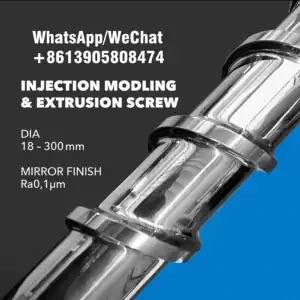
Twin screw extruders are vital in modern plastic, food, and chemical processing industries. Known for their high mixing efficiency, precise control, and flexibility, they outperform single screw systems in many demanding applications.
But what exactly makes a twin screw extruder tick?
In this article, we break down the key components of a twin screw extruder, explain how each part functions, and help you make smarter purchasing and maintenance decisions.
🔍 What Is a Twin Screw Extruder?
A twin screw extruder uses two intermeshing (or non-intermeshing) screws to mix and process materials through a heated barrel. It’s used in:
- Plastic compounding
- Masterbatch production
- Wood plastic composites (WPC)
- Engineering polymer modification
- Food & pharmaceutical processing
Twin screw extruders are either co-rotating (same direction) or counter-rotating (opposite direction), depending on the application.
🧩 Main Parts of a Twin Screw Extruder
Let’s explore the core components:
1. Feeding System (Hopper)
- Purpose: Delivers raw materials into the screws.
- Options: Gravity feed, forced feed, side feeder for fillers/fibers.
- Importance: Ensures consistent input to avoid fluctuation in output.
2. Twin Screws
- Function: Transport, mix, shear, melt, and pressurize the materials.
- Types:
- Parallel or Conical
- Segmented design for modular flexibility
- Screw Elements:
- Conveying elements
- Kneading blocks
- Mixing discs
- Reverse elements
🔧 Modular screw design allows customization for specific materials and performance targets.
3. Barrel
- Structure: Divided into several heating zones.
- Material: Nitrided or bimetallic for wear and corrosion resistance.
- Function: Provides the heat and containment for plasticizing and compounding.
4. Heating and Cooling System
- Heaters: Electric bands or cast aluminum heaters.
- Cooling: Air or water-cooled barrel zones.
- Goal: Maintain precise temperature control along the process.
5. Gearbox
- Role: Transfers motor torque to the screws with precise synchronization.
- Requirements: Must handle high torque and axial load for heavy-duty operations.
- Feature: High-performance twin output shafts.
6. Motor
- Function: Powers the entire extrusion system.
- Types: AC or servo motor depending on energy and control needs.
- Tip: Energy-efficient motors reduce operation costs over time.
7. Die Head
- Role: Shapes the final product as the melt exits the barrel.
- Common Forms:
- Sheet dies
- Strand pelletizer dies
- Profile dies
- Underwater pelletizer
8. Control System
- System: PLC or touch-screen HMI control.
- Features: Monitors speed, pressure, torque, temperature, alarms.
- Advanced Option: Integration with SCADA/Industry 4.0 for smart factory applications.
Optional Parts in Advanced Lines
- Side Feeder – for talc, CaCO₃, wood fiber, or glass fiber.
- Vacuum Venting Unit – to remove volatile gases and moisture.
- Strand Cutter / Pelletizer – cuts extrudate into granules.
- Screen Changer – filters out impurities before die head.
🌐 Real-World Application Areas
Twin screw extruders are used in:
- Polypropylene (PP) & Polyethylene (PE) compounding
- PVC cable compounding
- PET bottle flakes recycling and pelletizing
- Flame retardant masterbatch production
- Biodegradable material extrusion (e.g., PLA, PBAT)
📚 Related Reading
- Understanding Screw Design in Twin Screw Extruders
- Plastic Compounding Market Trends 2025 (Research Report)
🏭 Looking for a Reliable Supplier in China?
At Zhoushan Juyuan Machinery Co., Ltd., we manufacture:
✅ Parallel & conical twin screws
✅ Bimetallic and nitrided barrels
✅ Modular screw elements
✅ Customized screw/barrel solutions for Coperion, Leistritz, JSW, and others
💡 OEM & aftermarket solutions available.
📩 Contact Us
📧 Email: cxj.job@gmail.com
📱 WhatsApp: +86 13905808474
🌐 Website: https://juyuan-machinery.com
High-Quality Spare Parts for High-Performance Extrusion. Made in China, Trusted Worldwide.