
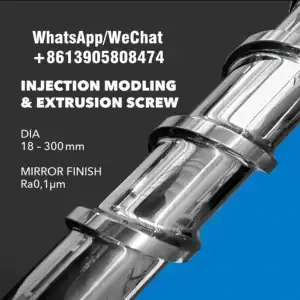
In injection molding production, maintaining the correct wear tolerances between the screw and barrel is essential for consistent plasticizing performance, product quality, and energy efficiency. Over time, wear occurs naturally due to friction, high temperatures, and the abrasive or corrosive nature of certain materials. Understanding permissible wear tolerances helps determine when maintenance, repair, or replacement is needed to avoid costly downtime.
1. Why Wear Tolerance Matters
The screw and barrel work together to melt, mix, and convey the polymer. When the gap between the flight lands of the screw and the inner wall of the barrel increases beyond the permissible range, melt leakage (backflow) rises sharply. This leads to:
- Reduced plasticizing efficiency and inconsistent shot weight
- Unstable melt temperature and poor product surface finish
- Longer cycle time and higher energy consumption
- Increased scrap rate and reduced output
Maintaining proper screw and barrel clearances ensures optimal performance and extends equipment life.
2. Typical Wear Tolerances
While exact tolerances vary by material and screw diameter, the following general guidelines apply:
- Nitrided steel barrels: 0.1–0.15 mm total clearance
- Bimetallic barrels: up to 0.2 mm for highly filled or abrasive materials
- Small-diameter screws (<45 mm): 0.06–0.1 mm maximum wear
- Medium to large screws (45–120 mm): 0.1–0.2 mm maximum wear
- Twin screws: typically lower allowable clearance, as synchronization is critical
Once wear exceeds 0.2–0.3 mm (depending on machine size), output and quality decline significantly, and refurbishment or replacement should be considered.
3. How to Measure Screw and Barrel Wear
Wear can be checked during maintenance using internal gauges, ultrasonic testing, or precision bore measurement tools. The screw flight diameter should be measured at several positions along the working section. For accurate diagnosis, both components should be measured together — because uniform wear may still maintain clearance, but uneven wear leads to instability.
4. Repair or Replacement Options
When tolerances exceed permissible limits, you can:
- Recondition the barrel by honing and installing a bimetallic liner.
- Rebuild the screw by hard-facing the flights with wear-resistant alloy.
- Replace the complete screw and barrel set if wear is severe or uneven.
For long-term performance, bimetallic barrels and high-speed steel or tungsten-coated screws are ideal choices for abrasive or recycled materials.
Learn more about our Bimetallic Screw Barrel and Injection Molding Screw and Barrel solutions designed for high durability and precision.
5. Optimizing Service Life
To reduce wear and extend screw/barrel life:
- Maintain correct temperature profiles
- Avoid running materials with excessive fillers or contaminants
- Clean the barrel properly before material changes
- Use suitable alloys and surface coatings for your application
By monitoring permissible wear tolerances and performing regular inspections, you can ensure stable production and prevent unexpected breakdowns.
Contact Us:
If you need to evaluate wear or replace your injection molding screw and barrel, our engineering team can provide professional assessment and custom solutions.
📧 Email: cxj.job@gmail.com
📞 WhatsApp/WeChat: +86 13905808474
🌐 Website: https://juyuan-machinery.com