
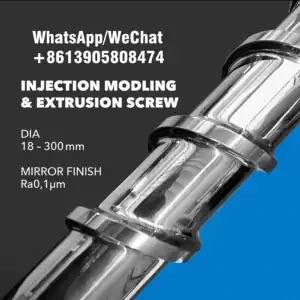

When running an injection moulding business, the screw and barrel inside your machine are more than just components — they are the heart of the plasticizing process. The right screw and barrel can mean the difference between smooth production with consistent quality and costly downtime due to wear, poor melting, or material contamination.
In this article, we’ll explore what a screw and barrel do, how to choose the right design, and how to maintain them for longer service life.
1. What Does the Screw and Barrel Do in Injection Moulding?
In an injection moulding machine, the barrel houses the screw, and together they:
- Convey raw plastic pellets from the hopper to the front of the machine
- Melt the material using heater bands and shear from the screw rotation
- Mix additives and colorants evenly
- Inject molten plastic into the mould under pressure
A well-matched screw and barrel set ensures:
- Uniform melt temperature
- Shorter cycle times
- Improved part quality
- Lower material waste
2. Types of Screws for Injection Moulding
Different applications require different screw designs:
- Standard General-Purpose Screw
- Suitable for most commodity plastics (PP, PE, PS)
- Simple and cost-effective
- Barrier Screw
- Has a special barrier flight for better melting efficiency
- Great for high-output production and semi-crystalline resins
- Vented Screw
- Includes a vent section to remove moisture and volatiles
- Often used for recycling and hygroscopic materials
- Mixing Screw
- Improves color dispersion and additive blending
- Ideal for high-quality surface finishes
3. Barrel Material and Lining
Your barrel must withstand both abrasion and corrosion from the plastic and additives used. Common materials:
- Nitride Steel – Cost-effective, good for general-purpose use
- Bimetallic Alloy – Higher wear resistance for abrasive fillers like glass fiber
- Special Coatings – For extreme corrosion resistance when processing PVC, fluoropolymers, or flame-retardant materials
4. Signs Your Screw and Barrel Need Replacement
Replacing the screw and barrel is not just about damage — performance loss is a big factor. Look out for:
- Reduced shot size or inconsistent injection pressure
- Longer cycle times due to slow plasticizing
- Burn marks, unmelted pellets, or color streaks in products
- Excessive back pressure requirements to achieve melt quality
5. How to Maintain Your Screw and Barrel
A few preventive steps can significantly extend lifespan:
- Purge the barrel when changing materials or shutting down
- Avoid running at excessive back pressure unless needed
- Use the correct screw speed to prevent overheating
- Schedule periodic measurements for wear using micrometers (see our guide: Injection Moulding Screw & Barrel Measurement Tips )
6. Choosing the Right Supplier
When selecting a screw and barrel for your injection moulding machine, look for:
- Custom design services based on your material and cycle time requirements
- Material expertise for abrasion and corrosion resistance
- Compatibility with your machine brand (e.g., Haitian, Engel, Arburg, Nissei)
- Strong after-sales support
For more technical data, you can refer to Plastics Technology Magazine’s screw design guide.
Conclusion
A well-designed screw and barrel can boost efficiency, reduce defects, and cut maintenance costs in injection moulding. Whether you are upgrading, replacing, or starting a new production line, the right choice will directly impact your profitability.
If you need customized screw and barrel solutions compatible with brands like Haitian, Engel, Arburg, and more, we can help.
📩 Contact Zhoushan Juyuan Machinery Co., Ltd.
Email: cxj.job@gmail.com
Phone/WhatsApp/WeChat: +86 13905808474
🌐 Website: https://juyuan-machinery.com/