
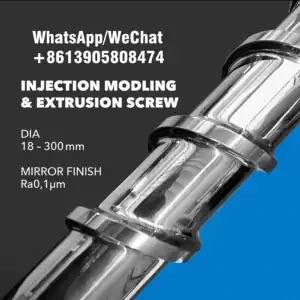
In the plastics manufacturing world, screw and barrel wear tolerances play a critical role in maintaining consistent product quality and machine performance. Over time, continuous friction, heat, and abrasive fillers cause gradual wear between the screw flight and the barrel wall — a natural process that can’t be avoided, but must be managed precisely.
Knowing how much wear is acceptable before it starts affecting production efficiency can help you extend equipment life and avoid costly downtime.
What Are Screw and Barrel Wear Tolerances?
Wear tolerance refers to the acceptable level of clearance between the screw flight outer diameter and the barrel inner diameter. When this gap increases beyond a certain limit, plastic leakage (known as backflow) occurs, reducing melting efficiency and mixing quality.
Typical tolerances vary depending on machine size and plastic type, but in general:
- For small extruders (⌀20–45mm): allowable wear is about 0.1–0.15mm
- For medium-sized extruders (⌀50–90mm): around 0.15–0.25mm
- For large extruders (⌀100mm+): up to 0.3mm may be acceptable
Once wear exceeds these limits, screw and barrel performance declines sharply — leading to uneven melt temperature, increased energy consumption, and product defects.
Causes of Excessive Wear
Several factors can accelerate screw and barrel wear, including:
- Abrasive materials such as glass fiber, calcium carbonate, or flame retardants
- Overheating or poor temperature control
- Improper screw design for the processed polymer
- Insufficient lubrication or cleaning
- Corrosion from additives or recycled materials
To minimize wear, proper material selection and regular inspection are essential.
How to Measure Wear Tolerance Accurately
Precision measurement of screw and barrel wear tolerances should be part of your routine maintenance plan. The most common methods include:
- Inner Diameter Measurement: Using a bore gauge to check barrel wear along the feed, compression, and metering zones.
- Screw Diameter Inspection: Using micrometers or calipers to record flight diameter at multiple points.
- Fit Clearance Testing: Comparing the screw OD and barrel ID to determine total clearance.
Even a small deviation can lead to significant melt leakage over time. According to Plastics Technology Magazine, maintaining optimal screw-to-barrel clearance can extend equipment life by up to 40%.
(Reference: Plastics Technology)
Solutions: Refurbishment or Replacement?
When wear exceeds the recommended tolerances, you have two main options:
- Refurbishment: Rebuild the screw flight with hardfacing alloys or reline the barrel with bimetallic material.
- Replacement: For severely worn or outdated parts, a new screw and barrel set ensures maximum efficiency.
At Zhoushan Juyuan Machinery Co., Ltd., we offer both refurbishment and custom manufacturing services to restore your extrusion system to optimal performance.
Explore our related products:
- Bimetallic Screw Barrel – superior wear and corrosion resistance
- Conical Twin Screw Barrel – ideal for PVC profiles and WPC extrusion
- Parallel Twin Screw Barrel – designed for high-output extrusion lines
Best Practices to Control Wear
To maintain your screw and barrel wear tolerances within safe limits:
- Schedule inspections every 6–12 months
- Use bimetallic barrels or nitrided screws for abrasive polymers
- Maintain stable processing temperatures
- Clean thoroughly during material changeovers
- Keep records of measurement data for preventive maintenance
Following these practices can significantly extend the operational life of your equipment and reduce total ownership costs.
Understanding and maintaining screw and barrel wear tolerances is key to ensuring consistent product quality, minimizing energy waste, and avoiding unexpected shutdowns. With proper maintenance and timely refurbishment, your extrusion or injection machine can continue performing at peak efficiency for years.
Contact the Experts
For professional assessment or high-precision screw and barrel solutions, contact Zhoushan Juyuan Machinery Co., Ltd. — your trusted partner in plastic processing technology.
📧 Email: cxj.job@gmail.com
📞 Phone/WhatsApp/WeChat: +86 13905808474
🌐 Website: https://juyuan-machinery.com/