
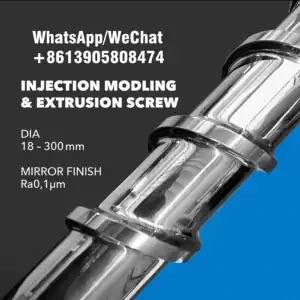
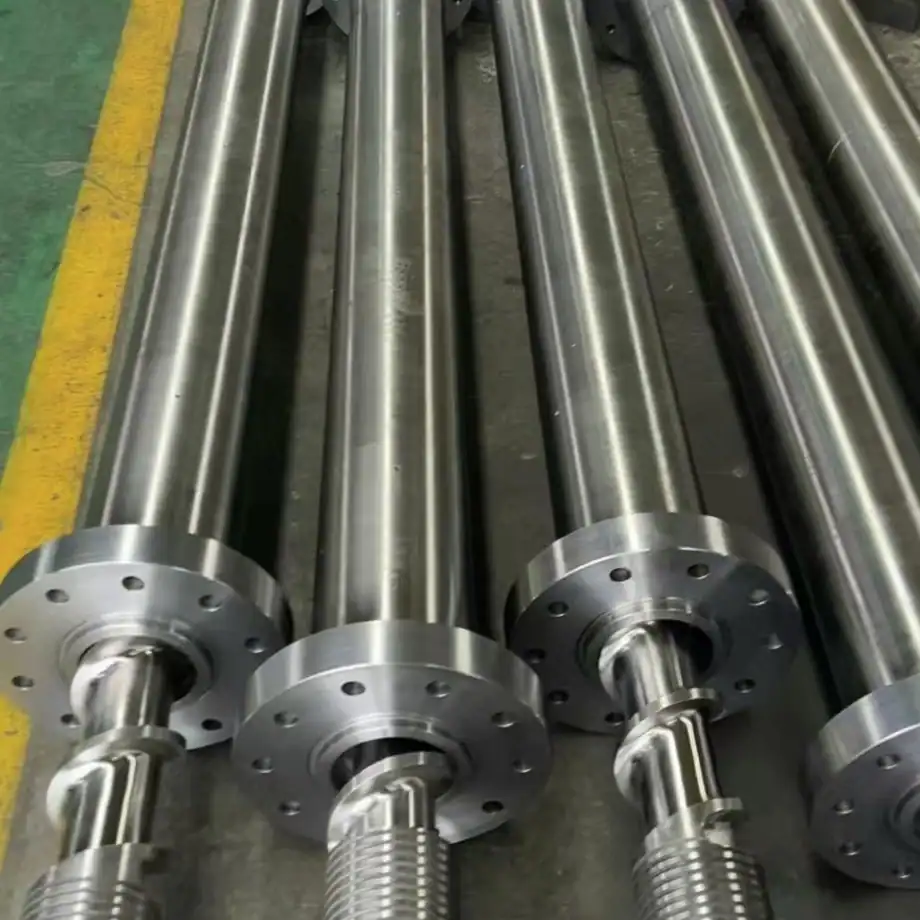
When it comes to the performance of an injection molding machine, precision is everything. One key factor that directly affects efficiency, product quality, and equipment life is the tolerance between the screw and barrel. But what exactly are acceptable injection molding screw and barrel tolerances, and how do they impact your operation?
What Are Screw and Barrel Tolerances?
In injection molding, tolerance refers to the allowable clearance or dimensional deviation between the outer diameter (OD) of the screw and the inner diameter (ID) of the barrel. This gap is crucial because it affects the compression, plasticizing, and injection process.
Typical tolerances for new components:
- Screw OD tolerance: ±0.01 – 0.03 mm
- Barrel ID tolerance: ±0.02 – 0.05 mm
- Clearance between screw and barrel: usually 0.1 mm – 0.2 mm
As wear increases, the clearance grows. Once the clearance exceeds 0.25 mm, plastic leakage, shear inconsistency, and backflow may occur—leading to reduced output and lower part quality.
Why Are Tight Tolerances Important?
The gap between the screw and barrel plays a major role in:
- Melt quality: Too much clearance leads to poor shear and uneven melting.
- Backflow control: Excessive tolerance causes material to leak backward, reducing injection pressure.
- Energy efficiency: Worn parts demand more heat and torque to maintain performance.
- Shot consistency: Tight tolerances ensure uniform plasticizing and shot size control.
According to Plastics Technology (source), excessive wear leads to output losses of up to 10–15% and increased scrap rates in high-precision applications like electronics and medical molding.
How Are These Tolerances Measured?
To monitor screw and barrel tolerances:
- Micrometer or caliper: For screw outer diameter
- Internal bore gauge: For barrel inner diameter
- Feeler gauge or custom jigs: For quick in-field checks
- Digital measurement tools: For advanced diagnostics
➡️ For more on measuring equipment, check our post: Why Are Micrometers Essential for Measuring Injection Molding Screws and Barrels?
When Should You Replace the Screw or Barrel?
Wear is inevitable, especially when processing:
- Glass-filled resins
- Flame-retardant materials
- Regrind-heavy mixes
Replacement is typically recommended when:
- Screw-to-barrel clearance exceeds 0.25 mm
- Product quality becomes unstable
- Cycle times increase unexpectedly
Many OEMs like Arburg, Haitian, and Sumitomo provide tolerance specs in their manuals. Regular inspections and preventive maintenance can save thousands in downtime.
Choosing High-Precision Screw and Barrel Assemblies
At Zhoushan Juyuan Machinery Co., Ltd., we manufacture high-precision injection molding screws and barrels with strict tolerances, using bimetallic liners for longer life and wear resistance. Our parts are compatible with leading brands and tailored to customer needs.
We ensure:
- Screw OD precision: ±0.01 mm
- Barrel ID precision: ±0.02 mm
- Custom configurations and fast turnaround
Final Thoughts
Understanding and maintaining the correct injection molding screw and barrel tolerances is key to ensuring consistent part quality, reducing downtime, and extending equipment life. Whether you’re running high-speed packaging molds or technical parts, don’t underestimate the importance of precision.
📩 Need help measuring or replacing your screw and barrel?
Contact me for OEM-compatible spare parts, custom solutions, or technical advice:
Chen Xiujiang
Sales Director, Zhoushan Juyuan Machinery Co., Ltd.
📧 cxj.job@gmail.com
🌐 https://juyuan-machinery.com
📱 WhatsApp: +86 13905808474
Precision today. Profit tomorrow.